

Essential oil
Wintergreen
Gaultheria procumbens
A cool, sweet essential oil, wild harvested from a small North American shrub.
Profile
- As listed on our products
- Gaultheria Procumbens (Wintergreen) Leaf Oil
- Plant family
- Ericaceae
- Part used
- Leaves
- Extraction
- Leaves macerated in warm water, then steam distilled
- Origin
- Eastern North America
- Aroma and texture
- Cool, sweet and minty
- Notable components
- Methyl salicylate, usually around 96–99% of the oil, which makes wintergreen one of the most single-compound essential oils there is
- Note
- Top to heart note
- In our products
- Wild harvested
About
Gaultheria procumbens is a low, creeping evergreen shrub of the forests of eastern North America. Its glossy leaves stay green through the winter, which is where its name comes from, and it carries small bell-shaped white flowers and bright red berries.
The fresh leaves have relatively little scent. Only when they are soaked in warm water does an enzyme in the leaf release methyl salicylate from its bound form. The macerated leaves are then steam distilled.
The plant grows slowly and is difficult to cultivate on a large scale, so true wintergreen oil is rare. Much of what is sold as wintergreen, or used for its flavour, is synthetic methyl salicylate, or oil from the related sweet birch. The wintergreen in Nidrā is wild harvested.
Properties and traditional use
Indigenous peoples of North America made a tea from the leaves and used them for aches and pains. Later, wintergreen became a familiar flavour in sweets, chewing gum and toothpaste.
Methyl salicylate is chemically related to the salicylates in willow bark and to aspirin. It has a long tradition in massage preparations and rubs for tired, stiff muscles, where it is always used in small amounts and well diluted.
In skin care
For the skin
Wintergreen is not chosen for the skin's appearance. Its place is in massage and the bath, for tired, stiff muscles, always in small amounts and well diluted.
Scent profile
Wintergreen smells cool, sweet and minty, a little like root beer or old-fashioned sweets. Because the oil is almost entirely one compound, its scent is clear and direct rather than complex.
It is very strong. Even a small amount is easy to notice in a blend, which is why it is used sparingly, as a bright, cooling accent rather than a main note.
Why it is part of our work
Why we use it
Wintergreen is an oil that asks for respect: powerful, with real precautions, and used in very small amounts. We use it where its tradition fits, in a bath for tired muscles, and we name it clearly so anyone with a salicylate sensitivity can make an informed choice.
In our formulations
Found in
-
Magnesium Mineral Bath
Nidrā
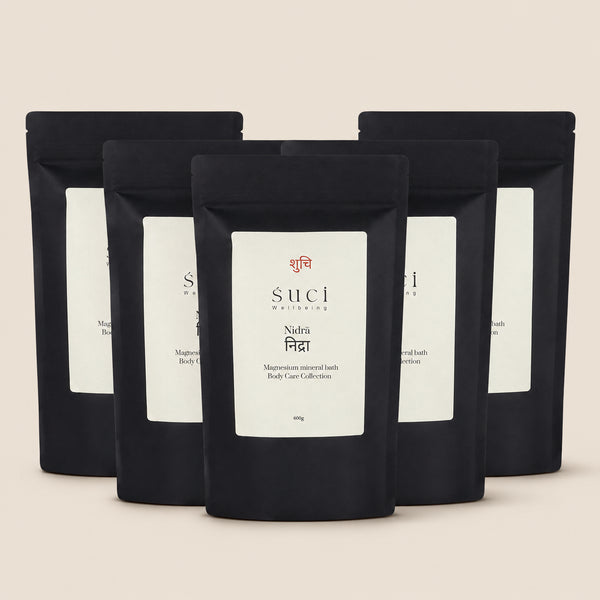
Discover NidrāIn Nidrā, wintergreen gives the aromatic blend its cool, sweet note. It sits alongside the fresh Spanish marjoram, the soft lavender and the warm, resinous frankincense, adding a bright coolness to the scent that rises with the steam.
It also carries a long tradition. Wintergreen has been used for generations in massage blends for tired muscles, which fits a bath meant for after a workout or a physically demanding day, with magnesium chloride as the mineral base.
It is used in a small amount and spread through a full bath of water, which keeps it well diluted. Because it naturally contains methyl salicylate, the Nidrā product page asks people who are sensitive to salicylates, pregnant, breastfeeding or with a medical condition to consult their doctor before use.
Safe use
Diluting essential oils
General maximums for essential oils used on their own. Where the precautions below ask for less, or for no use on the skin at all, those always come first.
Continue exploring

