
Absolute
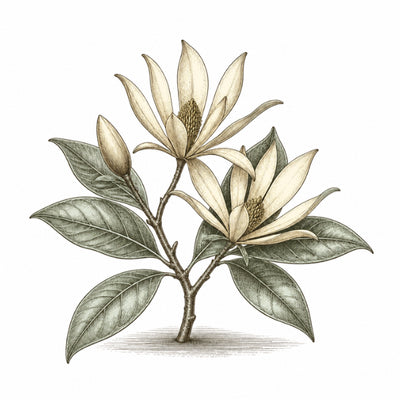
White champaca
Magnolia champaca
A rare, rich floral from the champaca tree, sacred in India and South-East Asia.
Profile
- As listed on our products
- Magnolia Champaca (Champaca) Flower Oil
- Plant family
- Magnoliaceae
- Part used
- Flowers
- Extraction
- Usually extracted from the flowers as an absolute
- Origin
- South and South-East Asia
- Aroma and texture
- Rich, sweet, floral and slightly fruity
- Notable components
- Linalool, methyl anthranilate, phenylethyl alcohol, methyl linoleate and indole, among many others
- Note
- Heart note
About
Champaca is a tall evergreen tree of the magnolia family, native to South and South-East Asia. Its small, pale yellow to cream flowers are intensely fragrant, and are offered in temples, strung into garlands and worn in the hair.
The flowers are delicate and yield very little aromatic material. Instead of being steam distilled, their scent is usually extracted with a solvent and refined into an absolute, the most concentrated form of a flower's fragrance.
Because so many flowers are needed for so little absolute, champaca is one of the more precious floral materials in perfumery.
Properties and traditional use
In Indian tradition, champaca flowers are linked to devotion. They are offered to deities, used in perfumes and attars, and have long been a symbol of beauty in poetry and art.
In aromatherapy, champaca is valued for its rich, uplifting floral scent and is often used in blends for a calm, contemplative mood.
In skin care
For the skin
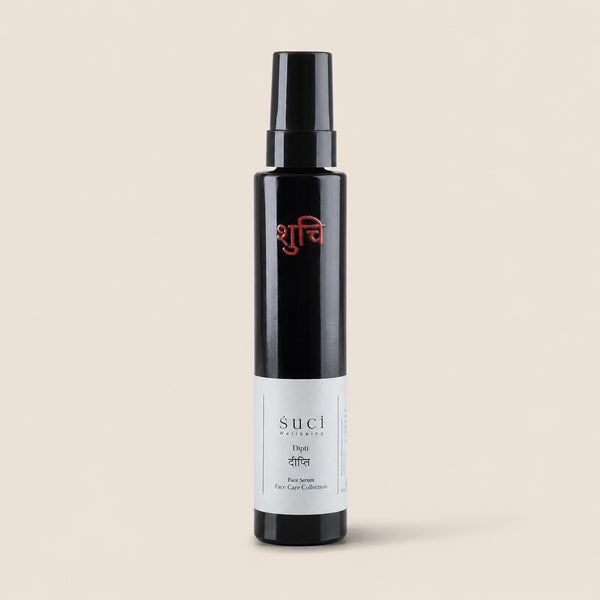
White champaca is valued for dry and dehydrated skin, which it leaves soft and comforted, and for giving skin a radiant look. In Dīpti it brings that softness together with its floral scent.
Scent profile
Rich, sweet and floral, with a ripe, fruity, almost apricot-like quality and a warm, slightly tea-like depth. It is intense, so a tiny amount colours a whole blend.
Champaca is a heart note. It gives a blend a luxurious floral centre and pairs well with fresh resins and woods, which keep its sweetness in balance.
Why it is part of our work
Why we use it
Champaca is one of the most beautiful floral scents we know, and it carries the devotional, contemplative character of the Indian traditions that inspire our work. It is intense, so it is used with care.
In our formulations
Found in
-
Face Serum
Dīpti
Discover DīptiIn Dīpti, white champaca sets the character of the scent. It is rounded off by frankincense and geranium.
Champaca is precious and intensely floral; frankincense adds clarity and warmth, and geranium a green-rosy freshness. Together they make the serum smell delicate rather than heavy, which suits a face serum made only of oils.
Its rich floral scent is what makes applying a few drops feel like a small ritual.
-
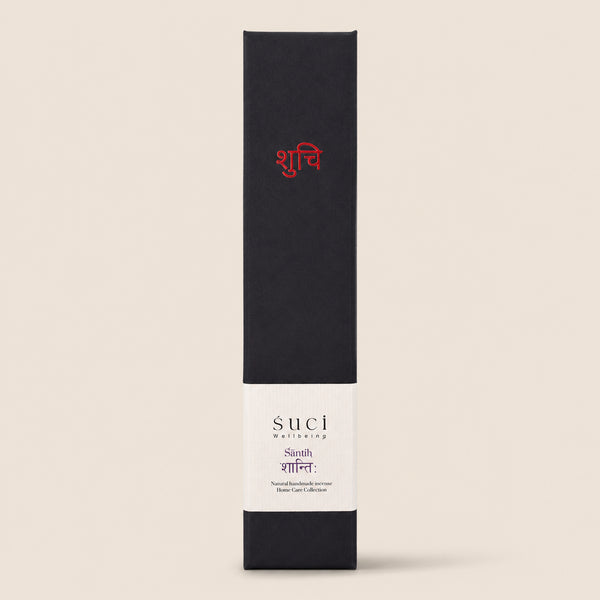
Natural Handmade Incense
Śāntiḥ
Discover ŚāntiḥIn Śāntiḥ, white champaca is the heart of the incense and gives it its soft, floral scent. It is supported by a traditional base of herbs, resins and flower powders, blended with pure essential oils.
Champaca has a long place in rituals and offerings in India, which makes it a natural choice for an incense named after peace. Each stick is rolled by hand in a village in South India, without charcoal, so the low heat of the ember slowly releases the champaca's scent rather than masking it with a smoky note.
Safe use
Diluting essential oils
General maximums for essential oils used on their own. Where the precautions below ask for less, or for no use on the skin at all, those always come first.
Continue exploring

