
Essential oil
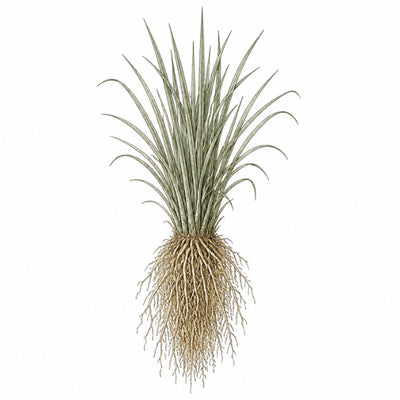
Vetiver
Vetiveria zizanioides
A deep, earthy oil distilled from the roots of an Indian grass, the base note of Sūrya.
Profile
- As listed on our products
- Vetiveria zizanioides (vetiver)
- Plant family
- Poaceae
- Part used
- Roots
- Extraction
- Steam distillation of the roots
- Origin
- India
- Aroma and texture
- Earthy, smoky, woody and deep
- Notable components
- A complex oil of sesquiterpene alcohols and ketones, including khusimol, vetiselinenol, isovalencenol and alpha- and beta-vetivone
- Note
- Base note
About
Vetiver (Vetiveria zizanioides, today also classified as Chrysopogon zizanioides) is a tall, clumping grass native to India. Its roots grow straight down, often several metres deep, forming a dense underground net.
That root system holds soil in place so well that vetiver is planted around the world against erosion on slopes, terraces and riverbanks. The aromatic oil is in the roots, not in the leaves.
The roots are dug up, washed, dried and chopped, then distilled for a long time, often many hours, because the heavy aromatic molecules are released slowly. The resulting oil is thick and amber to dark brown, and is often said to improve with age.
Properties and traditional use
In India, vetiver is called khus. Woven mats of the roots are hung in doorways and windows and sprinkled with water, so the air that passes through is cooled and scented. Khus is also used to flavour drinks and sherbets.
In Ayurveda and Indian tradition, vetiver is associated with cooling and calm. In aromatherapy, it is traditionally used for grounding and to slow down, and it is sometimes called the oil of tranquillity.
In skin care
For the skin
Vetiver is valued for dry, mature and depleted-looking skin, with a nourishing, grounding character. In our products it is used in Sūrya, for the home.
Scent profile
Deep, earthy and woody, with a smoky, slightly sweet and rooty character, like damp soil after rain mixed with dry wood. Its scent is complex and changes over hours.
Vetiver is one of the slowest evaporating essential oils. In a blend it is a classic fixative: it anchors lighter notes, slows their evaporation and gives the whole blend depth and staying power. Used in small amounts, it adds warmth and roundness rather than smell distinctly of earth.
Why it is part of our work
Why we use it
Vetiver is the oil we turn to when a blend needs roots: depth, warmth and staying power, without the need for synthetic fixatives. A little of it lets the fresh notes in a blend last longer and makes the scent feel complete.
In our formulations
Found in
-
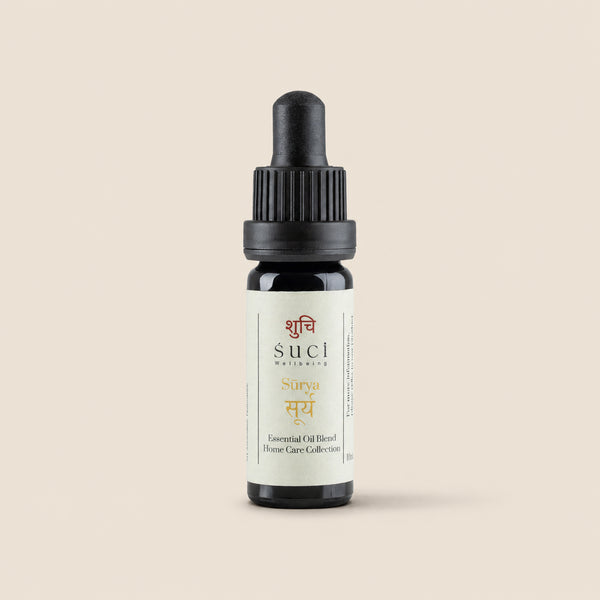
Essential Oil Blend
Sūrya
Discover SūryaVetiver is the base note of Sūrya. It comes from the roots of the plant and is one of the slowest evaporating essential oils, so it gives the blend its staying power.
Bergamot and cardamom are fresh and light, and on their own they would fade quickly. Vetiver anchors them: its earthy depth gives the bright citrus and warm spice something to rest on, so the scent stays present in the room long after you start the diffuser.
It is used to ground rather than dominate. You do not smell Sūrya as earthy; you notice it as fresh and light, but with a quiet depth underneath. That balance is what makes it work as well in a living room as in a study or shared space.
-
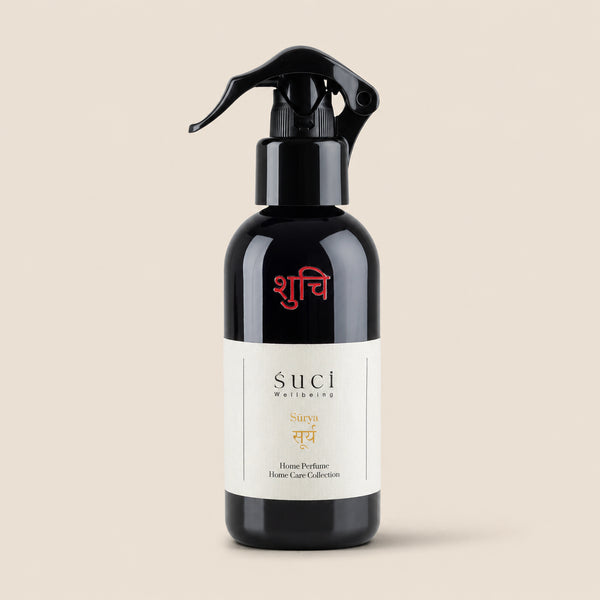
Home Perfume
Sūrya
Discover SūryaIn Sūrya Home Perfume, vetiver is the earthy base that lingers longest. When the certified organic alcohol has evaporated and the bergamot has faded, vetiver is what remains in the air and especially on fabric.
Sprayed onto cushions, curtains or bedding, vetiver and cardamom keep the scent noticeable for longer. Together with the softening bitter orange hydrosol, it makes the spray feel rounded and calm rather than sharp, while keeping Sūrya's fresh, light character.
Safe use
Diluting essential oils
General maximums for essential oils used on their own. Where the precautions below ask for less, or for no use on the skin at all, those always come first.
Continue exploring

