
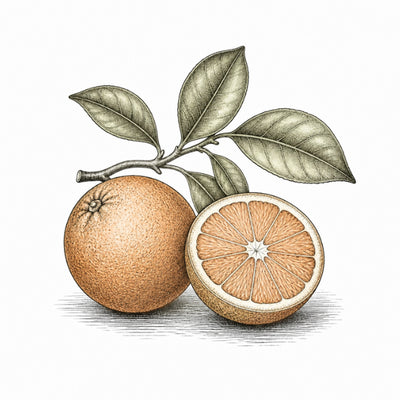
Essential oil
Sweet orange
Citrus sinensis
A sweet, familiar citrus oil pressed from orange peel, the top note of Kṣiti.
Profile
- As listed on our products
- Citrus sinensis (sweet orange)
- Plant family
- Rutaceae
- Part used
- Peel
- Extraction
- Cold expressed from the peel
- Origin
- Southern China and South-East Asia
- Aroma and texture
- Sweet, juicy and bright
- Notable components
- Limonene, usually more than 90% of the oil, with myrcene, alpha-pinene and small amounts of aldehydes such as decanal and octanal that give it its juicy character
- Note
- Top note
About
The sweet orange (Citrus sinensis) comes originally from southern China and South-East Asia. It reached the Mediterranean in the fifteenth and sixteenth centuries and is now grown in warm climates around the world.
Its oil is not distilled but cold pressed from the peel. The rind is full of tiny oil glands; when they are pressed or scraped, they burst and release the scent you know from peeling an orange. Much of the world's orange oil is pressed from the peel left after juicing.
Cold pressing keeps the oil close to the fresh fruit, with its sweet, juicy brightness intact.
Properties and traditional use
In aromatherapy, sweet orange is traditionally used to create a warm, cheerful and uplifting atmosphere. It is one of the most widely loved essential oils, with a scent almost everyone recognises.
Unlike cold-pressed bergamot and grapefruit, cold-pressed sweet orange oil is not considered phototoxic.
In skin care
For the skin
On the skin, sweet orange is valued for brightening dull-looking skin, but it oxidises easily and can then irritate. That is why we use it only in Kṣiti, for the home, and not in our skin care.
Scent profile
Sweet, juicy and bright, exactly like freshly peeled orange, without the sharpness of lemon or the bitterness of grapefruit.
Citrus oils are among the most volatile essential oils, so sweet orange is the first note you notice and the first to fade. In a blend it makes a warm, inviting opening, and it sits especially well with spices and resins.
Why it is part of our work
Why we use it
A blend needs an opening that invites you in. Sweet orange does that warmly and gently: bright, sweet and familiar, without any sharpness, and it pairs naturally with warm spice and resin.
In our formulations
Found in
-
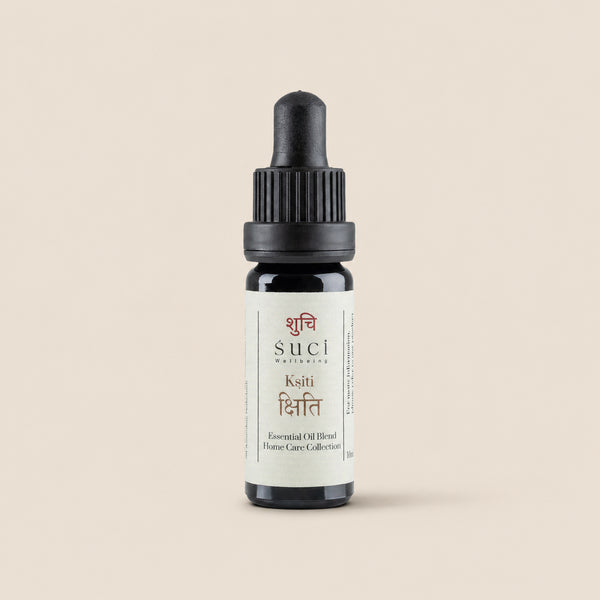
Essential Oil Blend
Kṣiti
Discover KṣitiIn the Kṣiti essential oil blend, sweet orange is the top note: the fresh, sweet first impression when you start the diffuser.
Kṣiti is built in layers that evaporate at different speeds. Sweet orange is the most volatile, so it greets you first and then gradually gives way to cinnamon and benzoin. Its sweetness also softens the edge of the cinnamon, so the spice reads as warm rather than sharp.
We chose sweet orange rather than a sharper citrus because Kṣiti is meant to feel like autumn indoors: warm, comforting and soft.
-
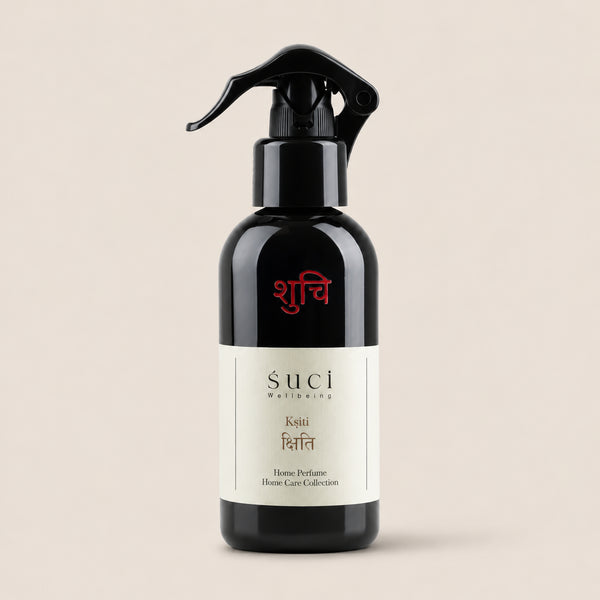
Home Perfume
Kṣiti
Discover KṣitiIn the Kṣiti home perfume, sweet orange is again the top note, now dissolved with cinnamon and benzoin in certified organic alcohol.
When you spray, the alcohol evaporates within moments, and sweet orange is the note that reaches you first. It gives the room an immediate brightness, while the cinnamon and benzoin settle into cushions, curtains and bedding and linger longer.
It is the same scent as the blend, but here the orange is what makes it feel fresh straight away.
Safe use
Diluting essential oils
General maximums for essential oils used on their own. Where the precautions below ask for less, or for no use on the skin at all, those always come first.
Continue exploring

