
Essential oil
Spanish marjoram
Thymus mastichina
Despite its name, a wild thyme from Spain, with a fresh, herbal scent.
Profile
- As listed on our products
- Thymus Mastichina Leaf Oil
- Plant family
- Lamiaceae
- Part used
- Leaves and flowering tops
- Extraction
- Steam distillation
- Origin
- The Iberian Peninsula
- Aroma and texture
- Fresh, herbal and slightly camphoraceous
- Notable components
- 1,8-cineole (often the largest part of the oil) and linalool, with smaller amounts of alpha-terpineol, alpha- and beta-pinene and camphor
- Note
- Top to heart note
- In our products
- Certified organic
About
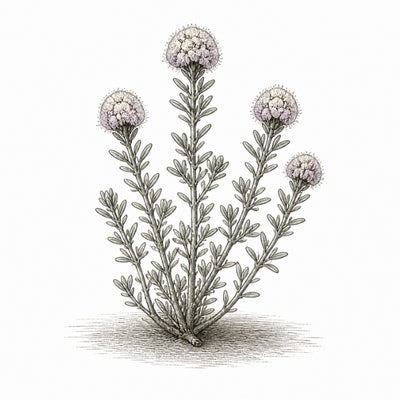
Thymus mastichina grows wild on the dry, stony hillsides of central Spain and Portugal, among cistus and holm oak. It is a small, woody shrub with grey-green leaves and round heads of white flowers.
Despite its name, it is not a marjoram at all. Botanically it is a thyme, and it is quite different from sweet marjoram (Origanum majorana), which is warmer and more herbal.
The leaves and flowering tops are harvested in late spring and summer, when the plant is in flower, and steam distilled. The result is an oil that combines the freshness of eucalyptus with the softness of lavender.
Properties and traditional use
In the Iberian countryside, the plant has long been gathered as a kitchen herb, especially for olives, meat and game, and used in home remedies.
In aromatherapy, Spanish marjoram is traditionally used to support easy breathing and to bring warmth and relaxation to tired muscles in massage. Its high 1,8-cineole content gives it the clearing quality that it shares with eucalyptus and rosemary.
In skin care
For the skin
Spanish marjoram is not chosen for the skin itself. In Nidrā it is dispersed through the bath water for its warming, clearing scent, so the skin only meets it in great dilution.
Scent profile
The first impression is fresh and clearing, close to eucalyptus, with a cool, slightly camphoraceous edge. Underneath sits a softer, herbal and faintly floral note from its linalool, which keeps it from feeling medicinal.
It is a light, fairly volatile oil that rises quickly, which makes it particularly suited to steam: in a warm bath or diffuser it is one of the first notes you notice.
Why it is part of our work
Why we use it
Spanish marjoram is less familiar than lavender or eucalyptus, but it is a lovely bridge between the two: fresh and clearing, yet soft. We chose it for a product meant to be breathed in with warm steam, where its freshness can open up the scent of the whole bath.
In our formulations
Found in
-
Magnesium Mineral Bath
Nidrā
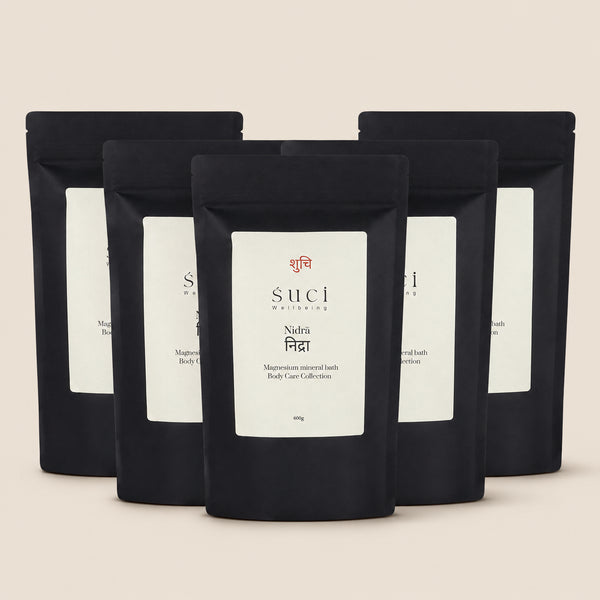
Discover NidrāSpanish marjoram is one of the two oils Nidrā's aromatic blend is built around, together with lavender. It gives the blend its fresh, open, herbal character.
In a warm bath, the lightest aromatic molecules rise first with the steam. Spanish marjoram is one of them, so it is the freshness you notice as soon as the minerals dissolve and you lower yourself into the water.
Its cineole-rich freshness balances the soft floral side of lavender, the warm resin of frankincense and the cool sweetness of wintergreen, so the scent stays clean and clear rather than heavy. It suits a bath taken after a workout or a physically demanding day, when you want to breathe deeply and let the body slow down.
Safe use
Diluting essential oils
General maximums for essential oils used on their own. Where the precautions below ask for less, or for no use on the skin at all, those always come first.
Continue exploring

