
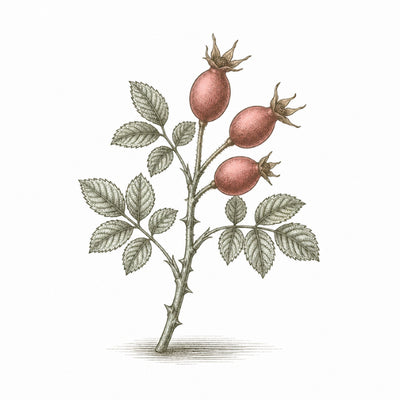
Carrier oil
Rosehip
Rosa rubiginosa
A fine, fast-absorbing oil pressed from the seeds of wild rose hips, rich in essential fatty acids.
Profile
- As listed on our products
- Rosa Rubiginosa (Rosehip) Seed Oil
- Plant family
- Rosaceae
- Part used
- Seed
- Extraction
- Cold pressed from the seeds inside the hips
- Origin
- Europe and western Asia; grown widely in the Andes of Chile
- Aroma and texture
- Fine, dry-feeling oil with a faint earthy scent
- Notable components
- Linoleic acid (about 40–50%), alpha-linolenic acid (about 30–35%) and oleic acid (about 13–20%), with naturally occurring carotenoids and tocopherols (vitamin E)
- In our products
- Certified organic, cold pressed
About
Rosa rubiginosa, the sweet briar or eglantine rose, is a wild rose of European and western Asian hedgerows, named for the apple-like scent of its leaves. It has spread widely in the southern Andes, and Chile is now one of the main sources of rosehip oil.
After the pink flowers fade, the plant forms bright red hips. Inside each hip sit small, hard seeds, and it is these seeds, not the fleshy fruit, that are cold pressed for the oil.
Rosehip seed oil is very rich in polyunsaturated fatty acids. That is what makes it so light on the skin, and also what makes it delicate: it is best kept cool, away from light and used while fresh.
Properties and traditional use
Rose hips have long been gathered for teas, syrups and folk remedies across Europe.
In skin care, rosehip seed oil is valued for its essential fatty acids, linoleic and alpha-linolenic acid, which play a part in the skin's barrier, and for its naturally occurring carotenoids and vitamin E. It is often chosen for dry, dull or uneven-looking skin, and to support a smoother, more supple-looking skin.
Texture and skin feel
Rosehip oil is golden to soft amber, coloured by its natural carotenoids, with a faint, earthy, slightly woody scent. It is a so-called dry oil: fine and thin, it spreads easily and absorbs quickly.
It leaves skin feeling soft and supple rather than oily, which makes it one of the few nourishing oils that work well even on skin that dislikes a heavy finish.
Why it is part of our work
Why we use it
Rosehip gives nourishment without weight. It brings essential fatty acids and carotenoids in an oil so fine that it suits both a rich balm and a light serum.
Because it is delicate, we use it alongside more stable oils and keep our batches small, so the oil reaches you fresh.
In our formulations
Found in
-
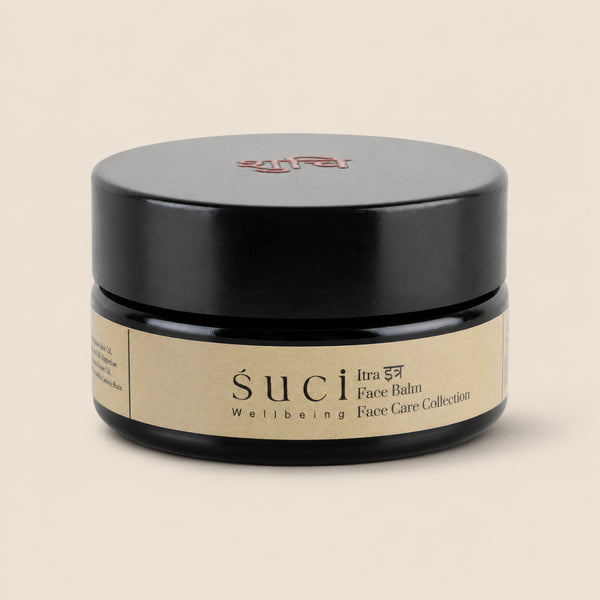
Face Balm
Itra
Discover ItraIn Itra, rosehip belongs to the second layer of the balm, together with sea buckthorn CO₂, as the source of naturally occurring vitamins and antioxidants. It sits alongside the fatty-acid oils evening primrose and borage.
Within a rich shea and jojoba base, rosehip is the lightest, finest oil. It makes the balm feel nourishing rather than heavy, and its linoleic and alpha-linolenic acids complement the gamma-linolenic acid of evening primrose and borage.
Its natural carotenoids join those of sea buckthorn, and together they give Itra part of its warm, golden tone. Its faint scent disappears under the aromatic layer.
-
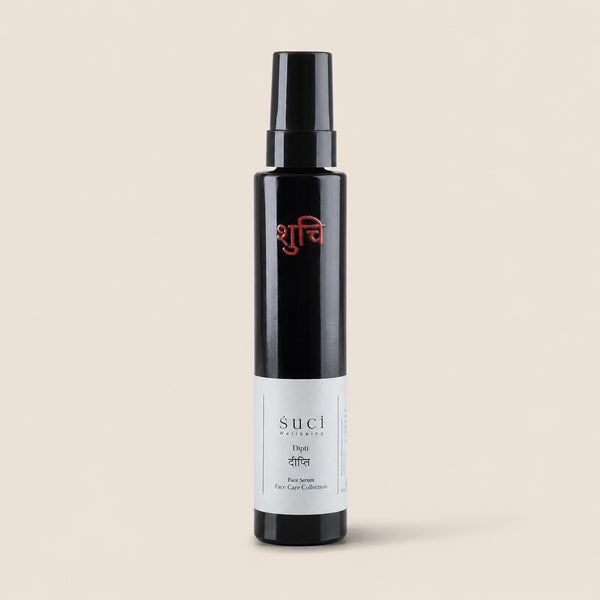
Face Serum
Dīpti
Discover DīptiRosehip is one of the key notes of Dīpti and the main source of its nourishment. Naturally rich in fatty acids, beta-carotene and vitamins A and E, it is what lets Dīpti support hydration and a smoother-looking skin texture.
Castor gives the serum its rich, full body and jojoba its glide; rosehip adds the care. It is a fine, dry oil, which balances the thickness of castor.
Its delicate nature is balanced by jojoba, which hardly oxidises, and the floral scent of white champaca, frankincense and geranium sits easily over its soft, earthy character.
Continue exploring

