
Essential oil
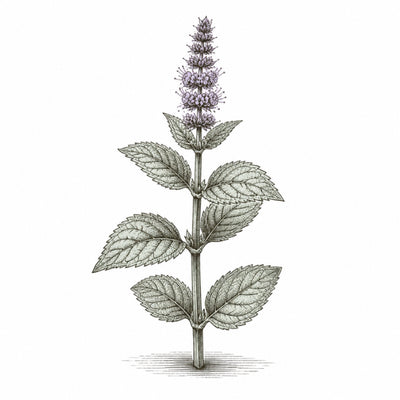
Peppermint
Mentha piperita
A fresh, cooling essential oil, one of the two key notes of Prāṇa.
Profile
- As listed on our products
- Mentha Piperita (Peppermint) Oil
- Plant family
- Lamiaceae
- Part used
- Leaves and flowering tops
- Extraction
- Steam distillation
- Origin
- A natural hybrid of watermint and spearmint, from Europe
- Aroma and texture
- Fresh, minty and cooling
- Notable components
- Menthol (often around 30–50%) and menthone (often around 15–30%), with smaller amounts of 1,8-cineole, menthyl acetate, menthofuran and limonene
- Note
- Top note
- In our products
- Certified organic
About
Peppermint is a natural hybrid of watermint (Mentha aquatica) and spearmint (Mentha spicata). It was first recorded in England in the late seventeenth century and is now grown widely in Europe, North America and Asia.
Because it is a hybrid, peppermint rarely sets fertile seed. It spreads through underground runners and is grown from cuttings and root divisions.
The leaves and flowering tops are harvested just as the plant starts to flower, when the oil content is highest, then partly dried and steam distilled. Menthol, the compound behind its cooling effect, sits in tiny glands on the surface of the leaves.
Properties and traditional use
Mint has been valued since antiquity, in Egypt, Greece and Rome, and peppermint quickly became one of the most widely used herbs in Europe once it was known, in teas, sweets and household remedies.
In aromatherapy, peppermint is traditionally used for focus, mental clarity and a clear head, and to refresh when you feel tired. Menthol stimulates the cold receptors in the skin and nose. That is why it feels cooling and why breathing it in gives a sensation of freer, more open breathing, even though it does not change the air itself.
In skin care
For the skin
On the skin, peppermint gives a cooling, refreshing sensation and is valued in small amounts for oily skin and for tired feet and legs. It is not used on the face.
Scent profile
Sharp, fresh and unmistakably minty, with a sweet, slightly herbal undertone. On the skin, peppermint does more than smell cool: it feels cool, a gentle tingle that builds within moments and slowly fades.
It is a top note with a strong presence. A small amount is clearly noticeable in a blend, and it can easily take over, which is why it is often paired with oils that soften and round it.
Why it is part of our work
Why we use it
Peppermint is one of the clearest examples of an essential oil you feel as well as smell. We use it where that quality is the point: in a product meant for breathing, focus and moments when you want to feel awake and clear.
In our formulations
Found in
-
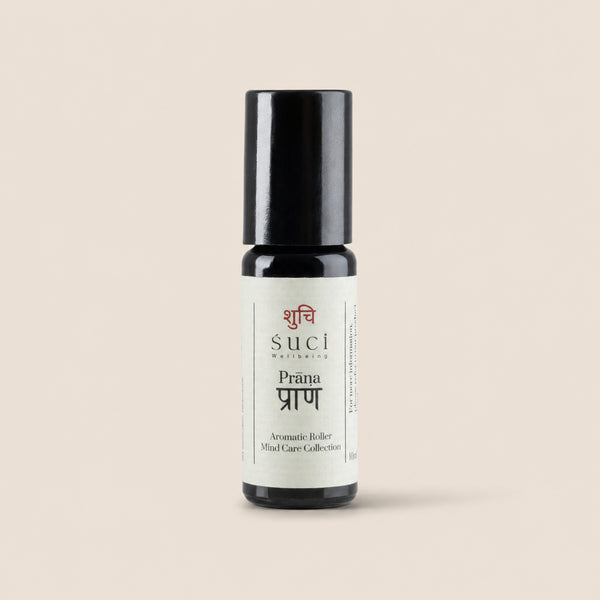
Aromatic Roller
Prāṇa
Discover PrāṇaPeppermint is one of the two key notes of Prāṇa, together with Eucalyptus radiata. It gives the roller its fresh, minty, cooling character.
Its menthol is what makes Prāṇa feel the way it does. Roll a little onto your palms, rub your hands together and breathe in: the cool sensation and sharp, minty scent make breathing feel more open and your head feel clearer, which is why Prāṇa suits breathwork, a workout or a long day at your desk.
Peppermint and eucalyptus share their freshness but differ in composition: peppermint brings menthol and a sharp sweetness, eucalyptus brings the clear, camphoraceous quality of 1,8-cineole. Together they are rounder and more complete than either one alone. Both are certified organic and blended in certified organic jojoba oil, a stable liquid wax that carries them well for a roller you use throughout the day.
Safe use
Diluting essential oils
General maximums for essential oils used on their own. Where the precautions below ask for less, or for no use on the skin at all, those always come first.
Continue exploring

