

Essential oil
Grapefruit
Citrus x paradisi
A fresh, tart citrus oil, the top note of Chandrikā.
Profile
- As listed on our products
- Citrus x paradisi (grapefruit)
- Plant family
- Rutaceae
- Part used
- Peel
- Extraction
- Cold expressed from the peel
- Origin
- Barbados, where it arose as a natural cross of pomelo and sweet orange
- Aroma and texture
- Fresh, tart and sparkling
- Notable components
- Limonene, usually around 90% or more of the oil, with myrcene, alpha-pinene and small amounts of nootkatone, which gives grapefruit its distinctive bitter freshness
- Note
- Top note
About
Grapefruit (Citrus x paradisi) is a natural hybrid of pomelo and sweet orange, first recorded in Barbados in the eighteenth century. The x in its Latin name marks it as a hybrid.
Its oil is cold pressed from the peel. The oil glands in the rind burst under pressure and release the scent, in the same way you smell it when you peel the fruit.
Its distinctive, slightly bitter freshness comes partly from nootkatone, a compound found in only very small amounts but with a strong influence on the scent.
Properties and traditional use
In aromatherapy, grapefruit is traditionally used for a fresh, light and uplifting atmosphere. It is one of the lighter citrus notes and is often chosen when a blend needs freshness without sweetness.
In skin care
For the skin
Grapefruit is valued for oily and congested-looking skin for its fresh, clarifying character. Cold-pressed grapefruit makes skin more sensitive to sunlight, so we keep it out of our skin care and use it only for textiles and the air.
Scent profile
Fresh, tart and sparkling, with a light bitterness that keeps it from being sweet. It smells clean and awake, like the first cut into a ripe grapefruit.
Grapefruit is a top note and one of the most volatile oils in a blend. It gives an immediate, bright opening and then fades, leaving room for the heart and base notes.
Why it is part of our work
Why we use it
Grapefruit gives a blend a light, clean opening that is fresh without being sweet or sharp. It is the note that makes a calming blend feel airy rather than heavy.
In our formulations
Found in
-
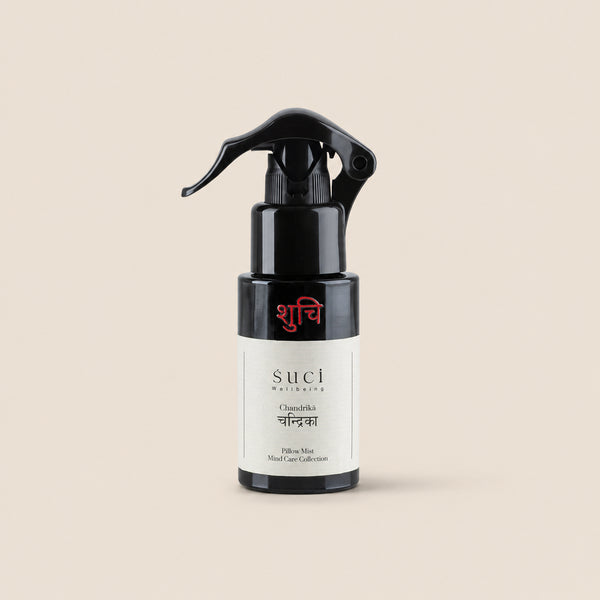
Pillow Mist
Chandrikā
Discover ChandrikāIn Chandrikā Pillow Mist, grapefruit is the top note: the first thing you notice when you spray. The blend then moves to the floral heart of lavender, geranium and rose hydrosol, with sandalwood as the woody base.
On your pillow or linen, the alcohol evaporates within moments and grapefruit is the light, fresh first impression. It fades quickly, which suits a mist meant to settle into something softer as you rest.
Because the mist is meant for textiles and the air rather than the skin, the sun sensitivity of cold-pressed grapefruit is not a concern in normal use.
-
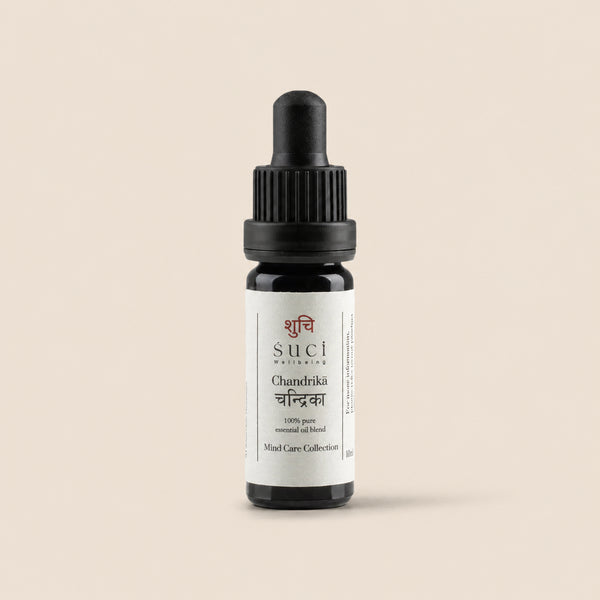
Essential Oil Blend
Chandrikā
Discover ChandrikāIn the Chandrikā essential oil blend, grapefruit is the top note above lavender, geranium and sandalwood. It is the most volatile of the four, so it gives the blend its fresh opening in the diffuser.
Chandrikā is formulated to move from fresh to soft. Grapefruit lightens the first moments, so the blend does not feel heavy or sweet, and then gently gives way to the soft floral heart of lavender and geranium and the woody calm of sandalwood.
Safe use
Diluting essential oils
General maximums for essential oils used on their own. Where the precautions below ask for less, or for no use on the skin at all, those always come first.
Continue exploring

