
Essential oil
Blue tansy
Tanacetum annuum
A rare, deep blue essential oil from Moroccan tansy, coloured by chamazulene.
Profile
- As listed on our products
- Tanacetum Annuum (Blue Tansy) Flower Oil
- Plant family
- Asteraceae
- Part used
- Flowering tops
- Extraction
- Steam distillation
- Origin
- Morocco and the western Mediterranean
- Aroma and texture
- Sweet, herbal and slightly fruity, with a deep blue colour
- Notable components
- Sabinene, camphor and myrcene, in amounts that vary widely from one harvest to the next, with chamazulene, which gives the oil its colour, and beta-pinene
- Note
- Heart note
- In our products
- Certified organic
About
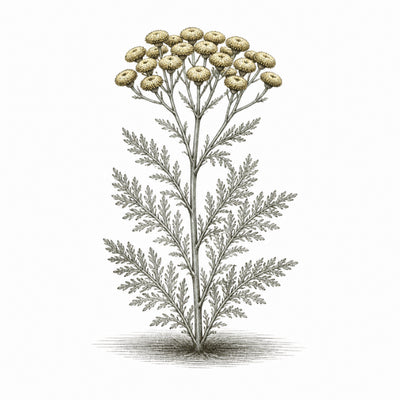
Blue tansy (Tanacetum annuum) is a small annual plant with clusters of yellow, button-like flowers, native to Morocco and the western Mediterranean. It is sometimes called Moroccan blue chamomile, although it is not a true chamomile.
The flowering tops are steam distilled. The plant itself is yellow and green; the deep blue colour only appears during distillation, when a natural precursor in the plant changes into chamazulene.
Blue tansy is a different plant from common tansy (Tanacetum vulgare), which contains thujone; blue tansy does not. Its supply is limited, which is part of why it is one of the more precious oils in skin care.
Properties and traditional use
Chamazulene is the same compound found in German chamomile, and both oils are valued for calming the look of irritated, reddened skin.
In skin care, blue tansy is used in small amounts for its soothing reputation, its striking colour and its soft, herbal aroma. In aromatherapy it is traditionally associated with calm.
In skin care
For the skin
Its chamazulene, the same compound that colours German chamomile blue, gives blue tansy its reputation for calming the look of redness and irritation. In skin care it is valued for sensitive, reactive and stressed-looking skin, always in small amounts.
Scent profile
The scent is sweet, herbal and slightly fruity, with a hint of camphor in the opening and a soft, warm, almost apple-like undertone. It is less floral than chamomile and greener.
It is a strong oil: a little goes a long way. In a blend it gives a soft, rounded herbal note that sits between fresh and warm.
Why it is part of our work
Why we use it
Blue tansy brings two things at once: a soothing reputation for the skin and a soft, herbal aroma that makes a floral blend feel calmer and less sweet.
In our formulations
Found in
-
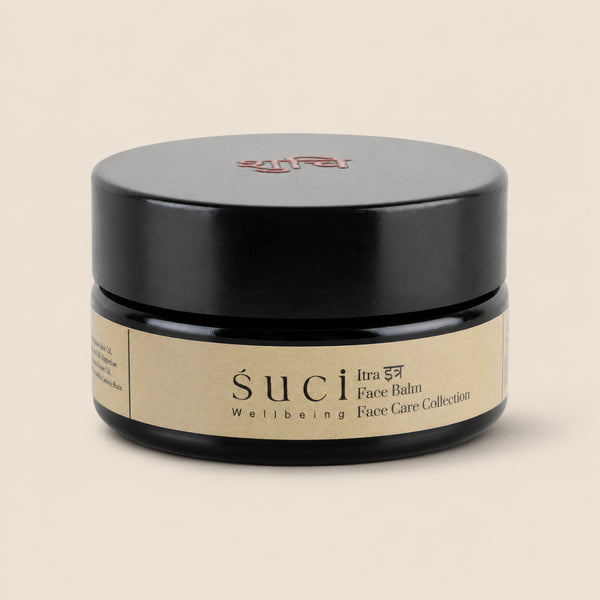
Face Balm
Itra
Discover ItraBlue tansy is one of the three key notes of Itra, and the first oil of its aromatic layer. It brings chamazulene, whose deep blue colour gives the oil its name, and a soft, herbal aroma.
In the scent of Itra it acts as a counterweight. Rose, jasmine and white floral notes can easily become sweet; blue tansy's herbal, slightly fruity character keeps the blend soft and calm, while sandalwood, frankincense and patchouli give it warmth and depth.
It is used in a small amount, carried in the shea and jojoba base, so it adds its soothing character to a balm made for dry, tight skin without colouring the balm blue.
Safe use
Diluting essential oils
General maximums for essential oils used on their own. Where the precautions below ask for less, or for no use on the skin at all, those always come first.
Continue exploring

