
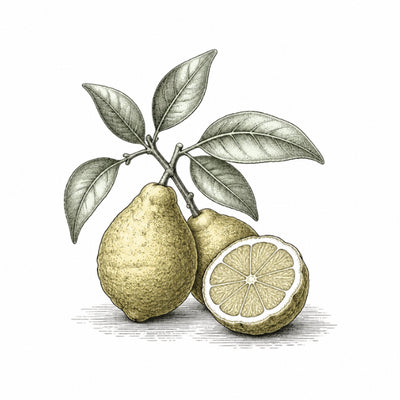
Essential oil
Bergamot
Citrus bergamia
A fresh, slightly floral citrus from Calabria, the top note of Sūrya.
Profile
- As listed on our products
- Citrus bergamia (bergamot)
- Plant family
- Rutaceae
- Part used
- Peel
- Extraction
- Cold expressed from the peel
- Origin
- A citrus hybrid of uncertain origin, grown mainly in Calabria, southern Italy
- Aroma and texture
- Fresh, citrus and slightly floral
- Notable components
- Limonene, linalyl acetate and linalool, with small amounts of furocoumarins such as bergapten in the cold-pressed oil
- Note
- Top note
About
Bergamot (Citrus bergamia) is a small, sour citrus of uncertain origin, grown mainly along a narrow strip of coast in Calabria, southern Italy. It is too bitter to eat and is grown for the oil in its peel.
The oil is cold pressed from the rind, traditionally by hand and now by machines that rasp the peel. The fruit is usually harvested in winter.
Bergamot is the citrus that flavours Earl Grey tea, and it has been central to perfumery since the first eaux de Cologne of the eighteenth century.
Properties and traditional use
In aromatherapy, bergamot is traditionally used to lift the mood and create a light, open atmosphere. It has a calmer, more floral side than other citrus oils, thanks to its linalyl acetate, the same compound found in lavender.
Cold-pressed bergamot contains bergapten, which makes the skin very sensitive to sunlight. For skin use, perfumers and aromatherapists often use bergapten-free bergamot.
In skin care
For the skin
Bergamot is valued for oily and blemish-prone skin for its fresh, purifying character, but cold-pressed bergamot makes skin very sensitive to sunlight. That is why we use it only in our home products.
Scent profile
Fresh, bright and citrus, but softer and more floral than lemon or orange, with a slightly bitter, green edge and a hint of spice.
Bergamot is a top note and one of the most volatile oils in a blend. It gives the first, crisp impression and then gives way to the heart and base notes. Its floral side lets it link smoothly with spices and woods.
Why it is part of our work
Why we use it
Bergamot gives a crisp, bright opening with a softness other citrus oils lack, which makes it ideal for a fresh signature scent that should never feel sharp. Because cold-pressed bergamot makes skin very sensitive to sunlight, we use it only in products for the home.
In our formulations
Found in
-
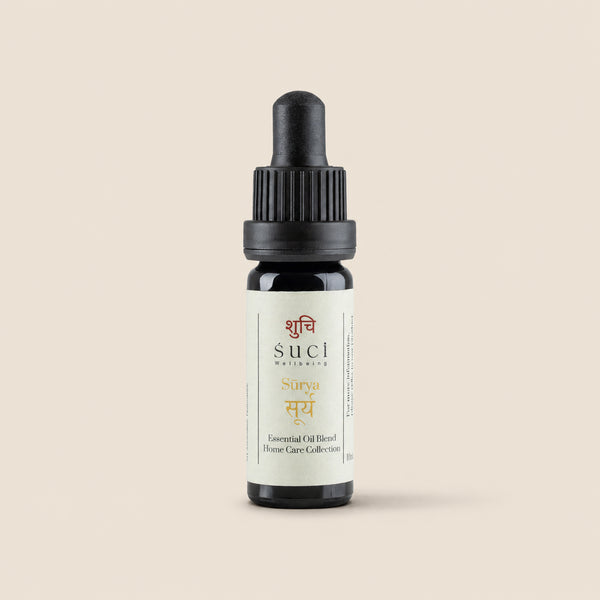
Essential Oil Blend
Sūrya
Discover SūryaIn the Sūrya essential oil blend, bergamot is the top note, above cardamom and vetiver. It is the most volatile oil in the blend and gives the crisp citrus opening that greets you when you start the diffuser.
Sūrya balances freshness and depth. Bergamot's floral, slightly spicy side links naturally to the warm cardamom heart, and vetiver anchors it with earthy depth. The result is a light signature scent that stays present all day without taking over the room.
-
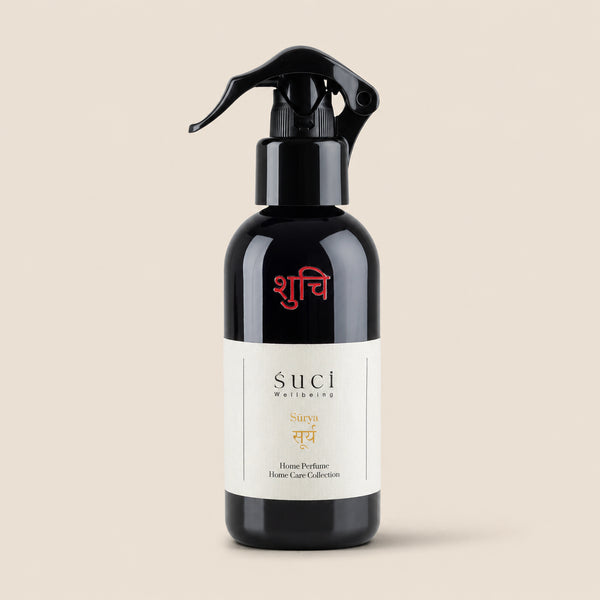
Home Perfume
Sūrya
Discover SūryaIn the Sūrya home perfume, bergamot is again the top note, dissolved with cardamom and vetiver in certified organic alcohol, with bitter orange hydrosol softening the blend.
When you spray, bergamot is the first thing you notice: a fresh, clean brightness that freshens the room straight away. The bitter orange hydrosol adds a soft, related citrus-floral quality, while cardamom and vetiver last longer on cushions, curtains or bedding.
Safe use
Diluting essential oils
General maximums for essential oils used on their own. Where the precautions below ask for less, or for no use on the skin at all, those always come first.
Continue exploring

